01
Establish Neutral
Every fitting starts from a neutral baseline — no assumptions, no presets.
- Setup
- Motion
- Strike
- Delivery
- Ball flight
- Feedback
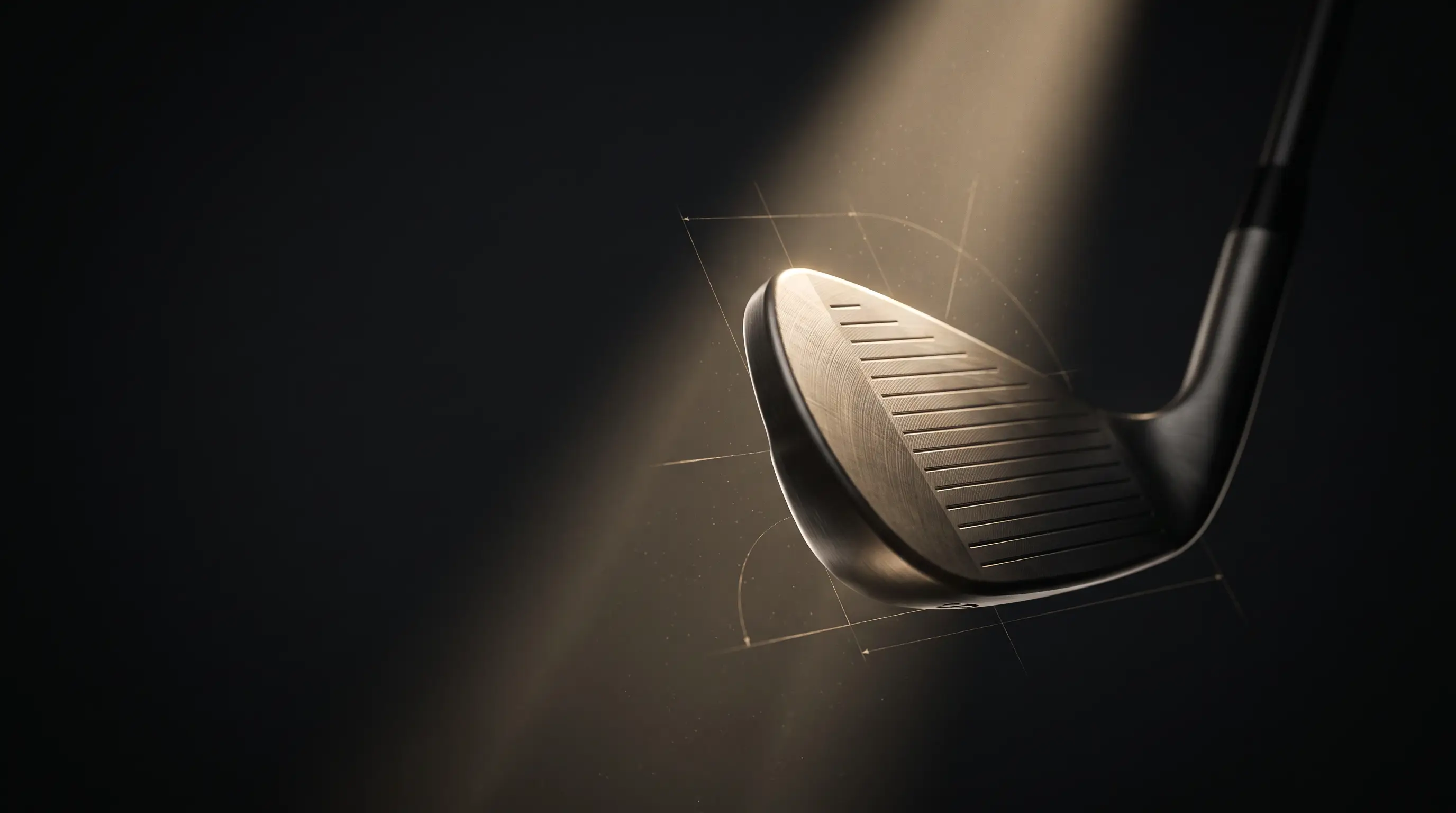
Avoda Precision Fit™ · Southeast Wisconsin
Build the clubs around your motion. Precision fitting built around how you naturally move, deliver the club, strike the ball, and interact with the turf.
Too many golfers change posture, setup, delivery, or hand position to accommodate equipment that was never properly fit for them.
My fitting process starts with the golfer. We identify the specifications that let you move naturally and deliver the club consistently.
The goal is not to force you into standard. The goal is to find your standard.
Drivers have used face curvature for a century — it's called bulge, and it exists to tame off-center strikes. Avoda is the first to CNC-mill that idea into irons. A precise horizontal curve across the face, engineered to counteract gear effect.
On a flat iron, a toe strike gears the ball left and a heel strike gears it right. The Origin's curved face is designed to cancel that exchange — reducing sidespin on mishits so the ball holds its line. Proven at the highest level: the 2024 U.S. Open was won with Avoda curved-face irons.
The milled bulge starts the same strike further right — gear effect turns the ball back toward the target.
The curvature is progressive — greatest in the long irons, where ball speed is highest and loft is lowest, tapering through the scoring clubs where loft already protects the start line. My fitting determines where curved faces help your dispersion — measured, not assumed.
Every fitting starts from a neutral baseline — no assumptions, no presets.
Instead of tiny changes, we deliberately test meaningful differences to reveal what you respond to.
One important variable at a time. Cause, separated from coincidence.
Once the correct relationships are identified, the specification is finalized — a club that works with you, not against you.
Six variables. One build. Scroll through the specification the way a fitting moves through it.
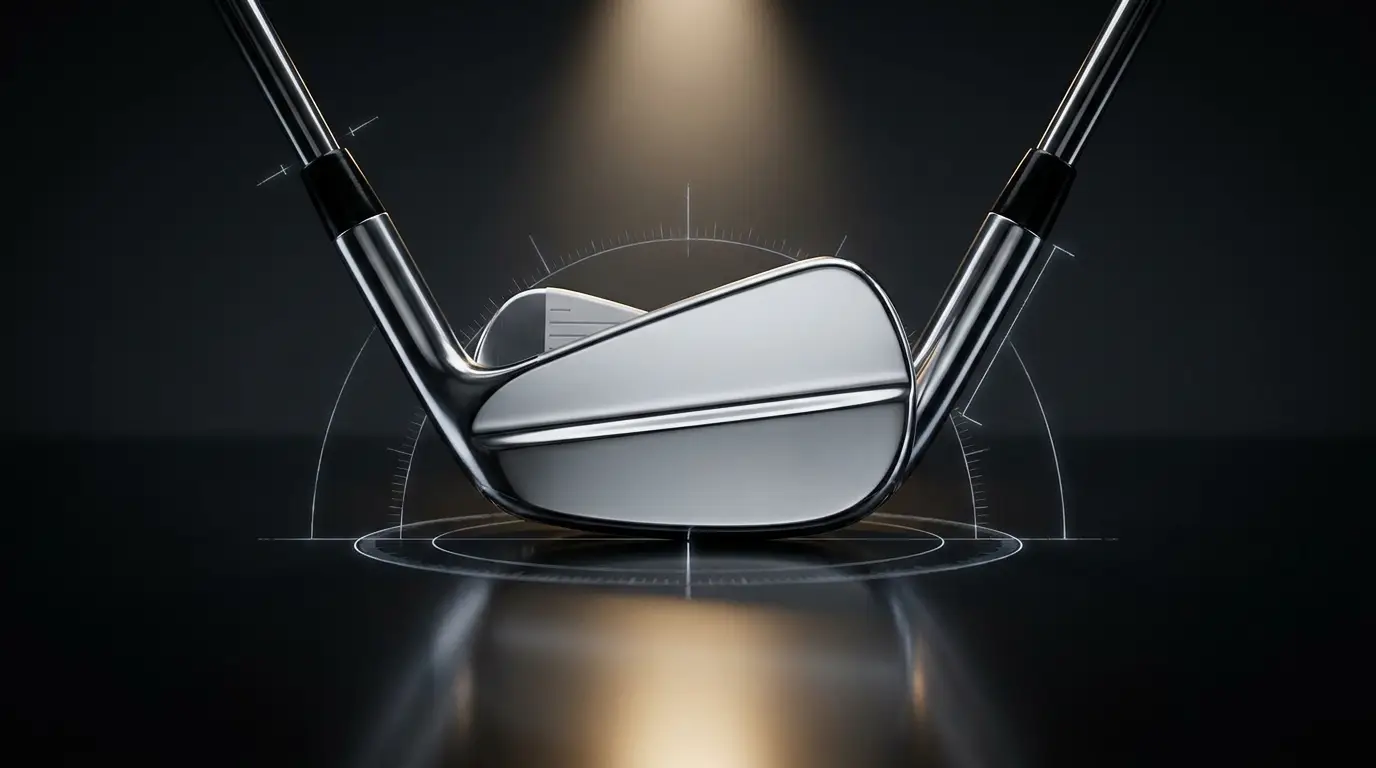
How the sole sits at impact shapes where the face points and how the club meets the ground. We fit lie dynamically — from your delivery, not a static chart.
Length should complement your posture, delivery, strike pattern, and athletic movement — not a number pulled from a wrist-to-floor table.
Weight, profile, and stiffness distribution change how the club loads and times through impact. Flex alone is a headline, not a fitting.
The only part of the club you touch. Size and texture can influence comfort, hand action, face awareness, and control.
Sole geometry and effective bounce influence how the club enters and exits the ground — matched to your angle of attack and the turf you actually play from.
Same length, combo length, or variable length. There is no universal answer — the fitting determines the configuration that suits the golfer.
Lie fitting is not a wrist-to-floor chart. What matters is how the club is delivered — in motion, at impact, on real turf. The fitting reads your dynamic delivery and observes how lie influences strike, start direction, the face relationship, and turf interaction.
Sole interacts with the ground evenly
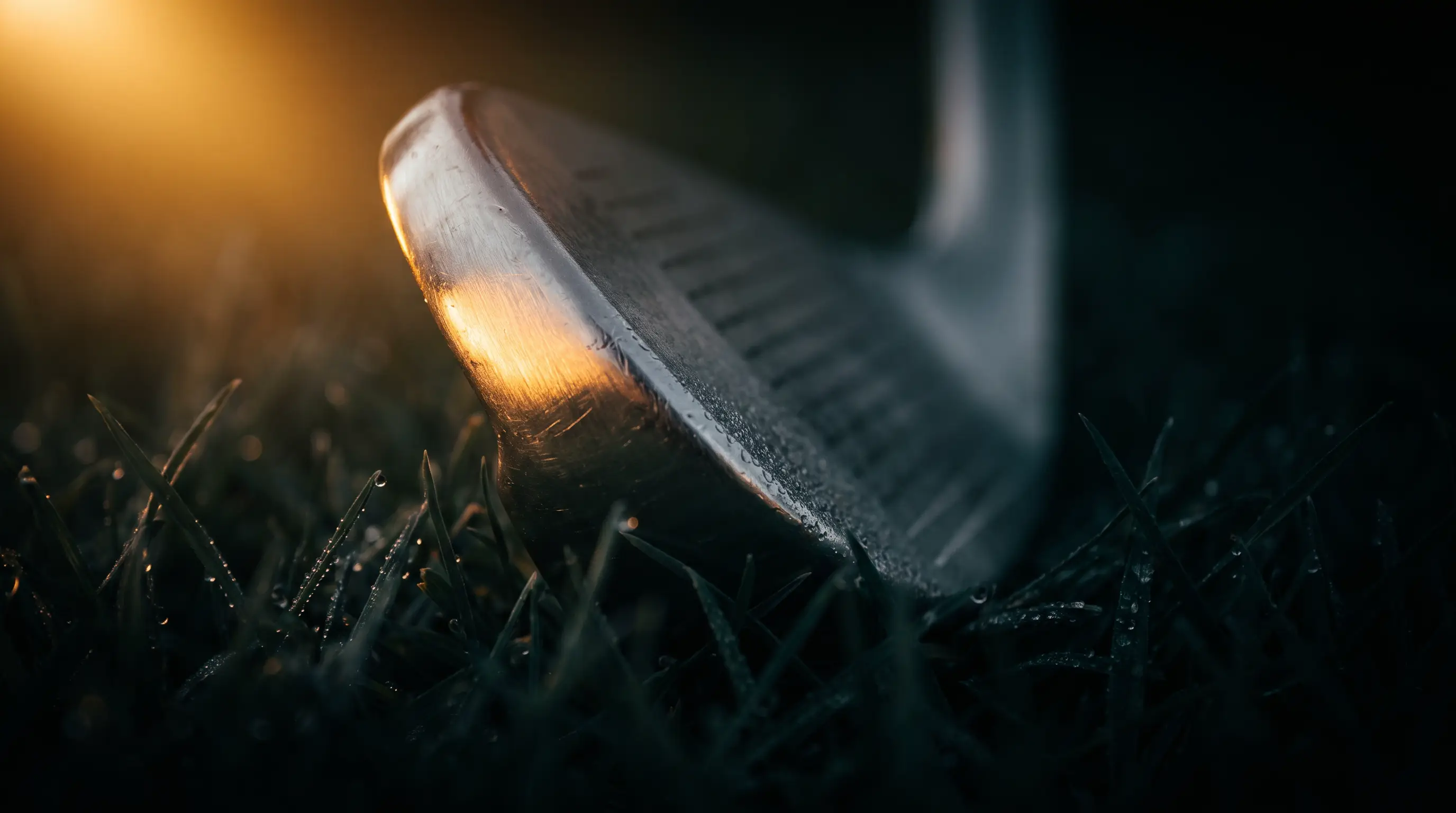
Sole geometry and effective bounce influence how the club enters and exits the turf — the difference between a strike that digs, skips, or glides.
A fitting that ignores the ground only fits half the collision. We match sole geometry to the way you actually deliver the club and the turf you actually play from.
A tip-active profile releases later and closer to the ball — it can influence launch, spin, and delivery timing.
“Fast swing = stiff shaft” is not a fitting. The right shaft is a system of weight, profile and timing that lets you deliver the club the same way, swing after swing.
How the club loads and sequences
Where the shaft bends along its length
Butt, mid and tip behavior — not one letter
Resistance to twisting through impact
When the club delivers, and whether you trust it
Delivery consistency over single-shot speed
Some golfers benefit from consistency. Some benefit from progressive length. Some benefit from a combination. The fitting determines the configuration — the golfer is never forced into a predefined philosophy.
One length, one setup, one strike pattern — consistency through repetition.
Scoring clubs matched at one length for precision; long irons progressive for speed and confidence.
Traditional progressive lengths — gapped and blended to the golfer, not a chart.
There is no universal answer — the correct configuration depends on the golfer

Waukesha, Wisconsin
Fittings on real turf, under real sky. Watch actual ball flight, read divot patterns, and feel how each build enters and exits the ground.
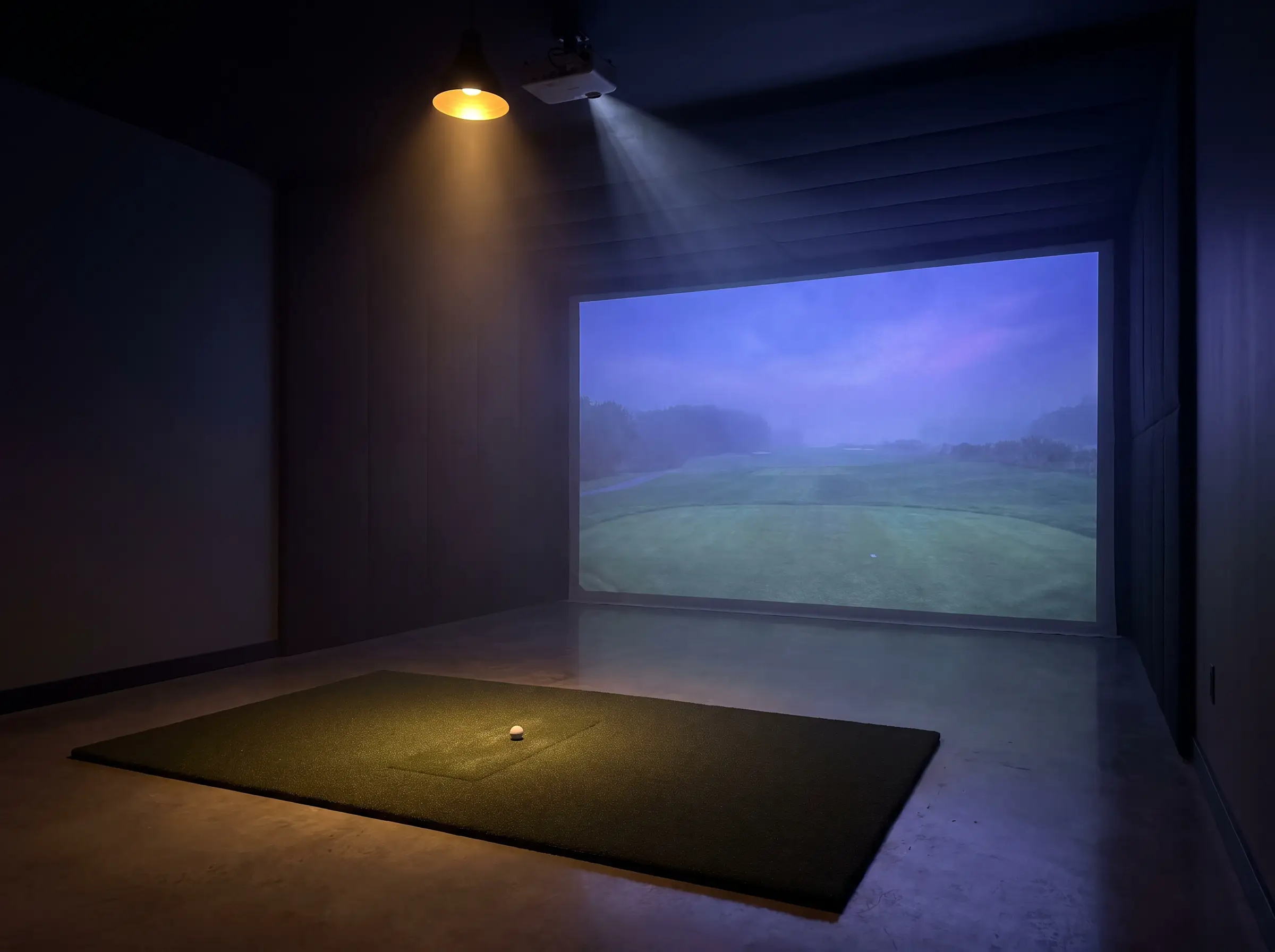
Brookfield, Wisconsin
A controlled environment built for clean comparison. Launch-monitor data, repeatable conditions, and precise A/B testing — twelve months a year.
I'm Mahmoud — an Avoda Precision Fitter based in Southeast Wisconsin. My work is understanding the relationship between five things:
When those five agree, golf gets simpler. My job is to help you discover the specifications that let you swing naturally and confidently — then build to them, exactly.
Avoda Precision Fitter designation · Southeast Wisconsin
Ready when you are
Tell me where you want to fit, what we're building, and how you play. I'll take it from there.